
Webinar: Communities of Practice as Launchpads for Sustainability Across the Campus
In 2024, 24 faculty and 6 staff members from 8 campuses in the State University of New York system participated in a Climate Solutions Community of Practice. During 7 virtual sessions, participants interacted with 13 expert presenters about climate change science and solutions through the confluence with energy use, policy, and human and ecosystem health as it impacts New York State, and nationally. Using presentation, curricula, and pedagogical resources housed in Canvas LMS, 23 undergraduate courses across 15 academic disciplines were redesigned and a proposal for a new course on climate change communication was developed. All courses directly impact an estimated 3,000 students/year into the future.
Facilitated by breakout discussions, the impact extended well beyond the classroom through conversations about civic engagement and the campus as a living lab. Sustainability Department staff coordinated guest lectures, film screenings, panel discussions, and tabling to raise awareness about solutions among their campus communities, and resources were used to inform grant applications to support campus sustainability initiatives.
Career Services staff curated and posted internship and climate-focused employment opportunities, conducted a gap analysis to identify industry partners for internships, and provided 1:1 advising, faculty mentorship, and experiential learning opportunities to students interested in climate careers.
Informal meetings among participants held on campuses outside the virtual sessions explored possibilities for integration of climate topics into curriculum beyond the scope of what was accomplished during the learning community. A discussion between sustainability staff and faculty participants during a breakout session grew into a collaboration that features sustainability staff identifying challenges that can be incorporated into projects for an undergraduate Sustainable Energy Management Capstone class. Using the same discussion as inspiration, sustainability staff developed a budget proposal to provide a stipend for a sustainability fellow in each academic unit with the goal of creating a follow-up community of practice to exchange ideas and perspectives on how to develop curriculum across all academic disciplines.
In this webinar, participants will provide first-hand accounts of how they used the community of practice as a launchpad for collaborative initiatives across and between campuses.
Presenters
 |
Wendy Olmstead, Director, Strategic Energy Innovations (SEI) Wendy leads Strategic Energy Innovations (SEI) Energize Colleges team in creating programming that supports higher education campuses in taking a multi-stakeholder, interdisciplinary, and equitable approach to integrating sustainability concepts into curriculum, student experiential learning, workforce education, and campus operations. As a former campus sustainability officer, Wendy is experienced in breaking down silos and forging collaborations among students, staff, faculty and administrators. |
 |
Timothy Volk, Professor and Associate Chair, SUNY ESF Dr. Timothy Volk brings over 30 years of experience integrating research, teaching, and applied practice in forestry, agroforestry, renewable energy, bioenergy, and phytoremediation. At SUNY ESF, his work centers on developing shrub willow biomass cropping systems as sustainable, scalable feedstocks for bioproducts and bioenergy, with a focus on real-world deployment and climate solutions. His research advances multifunctional landscapes, exploring applications such as phytoremediation, living snow fences, wastewater management, and nutrient and riparian buffering. A key component of his work is assessing the environmental and economic sustainability of bioenergy systems through life cycle analysis of willow biomass crops and woody biomass from forests. Dr. Volk is deeply committed to student engagement and experiential learning. He teaches in the Sustainable Energy Management program, including Biomass and Bioenergy and the Renewable Energy Capstone, where students work on applied, systems-based projects that connect classroom learning with industry and community partners. He has also been instrumental in building interdisciplinary sustainability education, helping launch a renewable energy minor that grew into a comprehensive undergraduate major and expanded to include graduate degrees. His efforts reflect a commitment to preparing students for leadership in the clean energy transition. Dr. Volk has secured more than $34 million in funding as principal investigator, an additional $16 million as co-principal investigator, and has coauthored over 150 peer-reviewed publications. His work bridges research, education, and implementation to support resilient communities and a sustainable bioeconomy. |
 |
Neyda Gilman, Librarian, Binghamton University Neyda V. Gilman is an Associate Librarian at Binghamton University in Binghamton, New York. She is the Assistant Head of Sustainability & STEM Engagement, co-founder of the Sustainability Hub and Seed Library, and Librarian for the School of Pharmacy & Pharmaceutical Sciences and departments of Physical Therapy, Occupational Therapy, Speech Language & Pathology, and Environmental Studies. As a librarian she curates information, assists students and faculty with their research, and provides information literacy instruction. Her current research focuses on seed libraries and seed saving – particularly with ties to culture, information literacy, sustainability in academia, and sustainability leadership. |
 |
Adam Charboneau, Lecturer, Stony Brook University Adam Charboneau is Lecturer of Sustainability Studies at Stony Brook University and an urban and environmental historian whose research interests lie at the intersections of public policy and planning, sustainability, and uneven development. His scholarship focuses on social, economic, and environmental justice, gentrification, grassroots activism, and the production of space. Dr. Charboneau’s published work has examined appropriations of abandonment, the marketing and media representation of local reclamation campaigns, and the social and environmental consequences of neoliberal governance. His teaching includes courses on systems thinking and systems dynamics, sustainable planning and development, collective action and advocacy, and multiple disciplinary approaches. He is currently investigating urban renewal, redevelopment, and sustainability in Long Island, New York, using area case studies as a means of experiential learning for undergraduates. |
 |
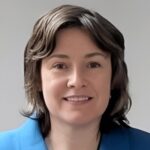
Sue Fassler, Director of Sustainability, SUNY ESF Sue serves as the Director of Sustainability at the SUNY College of Environmental Science and Forestry. She is also affiliated with the Center for Sustainable Materials Management, sits on the Tug Hill Tomorrow Land Trust Board of Directors, and co-chairs the United University Professions Environmental Issues & Advocacy Committee. |
 |
Orla LoPiccolo, Professor, Farmingdale State College, SUNY Orla Smyth LoPiccolo is a registered architect, professor, and former Chair of the Department of Architecture and Construction Management at Farmingdale State College, SUNY, where she has taught 17 courses since 2008. She earned her undergraduate and professional architecture degrees with honors from the Dublin Institute of Technology and Trinity College Dublin, and holds a Master of Architecture in Urban and Regional Design from the New York Institute of Technology and a Postgraduate Diploma in Building Construction Management from New York University. She is also a Certified Passive House Designer through the Passivhaus Institut. She has extensive professional experience in both the private and public sectors, including architecture and construction project management roles in Dublin and New York, and spent over a decade as an architect and Community Development Project Supervisor with the Town of Islip. She also served for five years as an adjunct assistant professor at NYIT, teaching architectural studio courses. At Farmingdale State College, Professor LoPiccolo has been actively engaged in campus governance and service, holding leadership roles on the Applied Learning Review Board, the Farmingdale Executive Committee, and the Public Art Task Force and Calendar Committee, and continuing service on the Auxiliary Service Corporation and Sustainability Committee. She has also held leadership roles within the American Society for Engineering Education, including Chair, Secretary, and Treasurer. As Department Chair (2017–2021), she led three successful ABET re-accreditation cycles, streamlined departmental processes, and strengthened partnerships connecting hundreds of students and alumni with employment opportunities. Her scholarship includes more than 20 peer-reviewed publications and presentations focused on innovative pedagogy, particularly in spatial reasoning, sustainable construction, and service learning. Her teaching and leadership have been recognized through numerous awards, including the Farmingdale State College Faculty Community Service Award (2026), ASEE Middle Atlantic Section Best Paper Award (2025), AIA Long Island Chapter Educator Award (2019), the SUNY Chancellor’s Award for Excellence in Teaching (2018), the Phenomenal Woman Award (2018), and the Innovative Pedagogy Award (2017). Most recently, she was named one of the 11 inaugural SUNY Sustainability Faculty Fellows. |