
- This event has passed.
Course: Behavior Change for Collective Climate Action
The course will meet over 4 sessions on Tuesdays from 3-4:30 p.m. ET: October 28, November 4, 11 and 18.
Practitioners, educators and students planning sustainability careers need multiple skills to be effective systems change agents towards a sustainable world. Behavior change is an essential ingredient of the systems change needed (Levin et al., 2020). Behavior change skills help motivate and accelerate sustainability actions by the general public, private sector, and public sector (Vaughter, 2016). Students, educators, and professionals need both the understanding and the ability to apply behavior change techniques appropriately. This course focuses on collective action, which amplifies climate impact and provides the scaffolding necessary to support governmental and business change. In this online course, we will show you the theory of collective action and how to incorporate behavior change principles into your programs and courses, all while you advance your own professional goals. The course presents state-of-the art interdisciplinary and transdisciplinary research behind the tools presented. Evidence-based behavior change tools include: social norms, social identity, increasing efficacy, and legacy motivation. The course concludes with a brief overview of how to get to scale. The course comprises brief multimedia lectures with practice exercises and active student responding modules to help you master the skills.
Learning objectives include:
• Identify and discriminate behavioral barriers to pro-climate behavior;
• Select examples of the proper application of behavioral tools that counter these behavioral barriers;
• Identify the appropriate behavioral tool for specific audiences and situations; and
• Identify effective strategies for outreach and communication to ideologically different audiences.
Key Details
Schedule:
The course will meet over 4 sessions on Tuesdays from 3-4:30 p.m. ET: October 28, November 4, 11 and 18. All sessions will be recorded and made available to registered participants.
Registration Fees*
| Registration Type | Registration Fee |
| Individual (non-student) associated with an AASHE member organization* | $160 |
| Individual (non-student) not associated with an AASHE member organization | $200 |
| Student | $75 |
| Groups | full price for first registrants and 20% off for each subsequent registrant |
* To check if your organization is a current AASHE member, please search the AASHE Membership Directory.
A limited number of scholarships are available to individuals who need financial assistance to participate. Please apply two weeks before the program begins to be considered for a scholarship for this workshop.
Registration Policies:
- Registration deadline is October 27, 2025.
- Payment is accepted in the form of Visa, MasterCard, American Express and Discover cards.
If you need to pay by check or ACH, please contact us at least 5 weeks prior to the event start date. Registration using these forms of payment must be received 4 weeks prior to the event start date and full payment must be received by AASHE within 2 weeks of event start date. - Cancellation Policy: A 20% processing fee applies to any cancellation processed up to ten days before the program starts. No refunds will be given after that date.
- No substitutions are allowed.
- Registered participants will receive access to the recording after the live event.
- Review all Terms & Conditions.
Facilitators
Caroly Shumway, Director, Center for Behavior and Climate
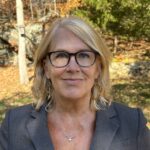 Dr. Caroly Shumway is Director of the Center for Behavior and Climate (CBC) which advances the use of behavior change tools to accelerate public climate action. Caroly has 25+ years of experience in behavior change, climate change, sustainable development, marine, freshwater, and land conservation, policy, research, and outreach in the U.S., Africa, Asia, and the South Pacific. In 2016-2017, she focused on innovations for development as USAID’s Chief Scientist for the Global Development Lab, Senior Science Advisor to USAID’s Administrator, and Director of the Center for Development Research; she has also been Executive Director of three environmental NGOs and has held senior positions at The Nature Conservancy and the New England Aquarium. Caroly holds a BA in Biology from Wellesley College, a Ph.D. from Scripps Institution of Oceanography (specializing in behavioral neuroscience), and was a postdoctoral fellow at Caltech, BU, and the Marine Biological Lab. She is passionate about making a difference on climate change, inspired by her grandfather, Dr. Roger Revelle, one of the earliest scientists to recognize human impacts on CO2; Dr Revelle was Al Gore’s mentor at Harvard.
Rebecca Edgecumbe, Senior Researcher, Center for Behavior and Climate
 Rebecca Edgecumbe, Senior Researcher, is inspired to utilize the principles of Applied Behavior Analysis (ABA) to address climate change. She earned her BS in psychology from the University of Washington, and went on to earn a MA in Clinical Psychology from Pepperdine University. After several years of working with children with autism and other developmental disabilities, she became a Board Certified Behavior Analyst (BCBA). With the Center for Behavior and Climate, Rebecca has merged her educational background and 20 years of professional experience in ABA with her lifelong interest in the environment and conservation. Rebecca is currently interested in motivating others to learn more about climate change and to take action to address this critical, existential issue at an individual and societal level.
Emma De Roy, Senior Researcher, Center for Behavior and Climate
 Emma De Roy, Senior Researcher, has a background in behavior change and communication. Emma has been teaching, conducting and publishing research, and managing programs within the fields of environmental and behavioral science for 7+ years. She has worked with the World Bank’s Mind, Behavior, and Development Unit, the Busara Center for Behavioral Economics, and the Green Climate Fund’s Behaviour and Design Lab. She has also taught at the post-secondary level to inspire youth action on the environment. At the Sierra Club Canada Foundation, she leveraged science communication to support grassroots action on the environment and notably air pollution.
Any questions about the workshop?
Please contact Daita Serghi, education@aashe.org