Inspiring higher education to lead the sustainability transformation
Announcements
We are excited to share that registration for the 2024 AASHE Conference & Expo in Anaheim, CA, this October 27-29 is now open! The conference offers invaluable educational and professional advantages, equipping you with the latest insights and strategies in higher-ed sustainability. Additionally, it presents an exceptional occasion to reconnect with colleagues and friends you haven’t seen since our last in-person gathering in Boston, MA. Take advantage of this unique chance to deepen your connections and foster meaningful collaborations. We look forward to welcoming you to an inspiring and memorable conference experience. See you in October!
Announcements
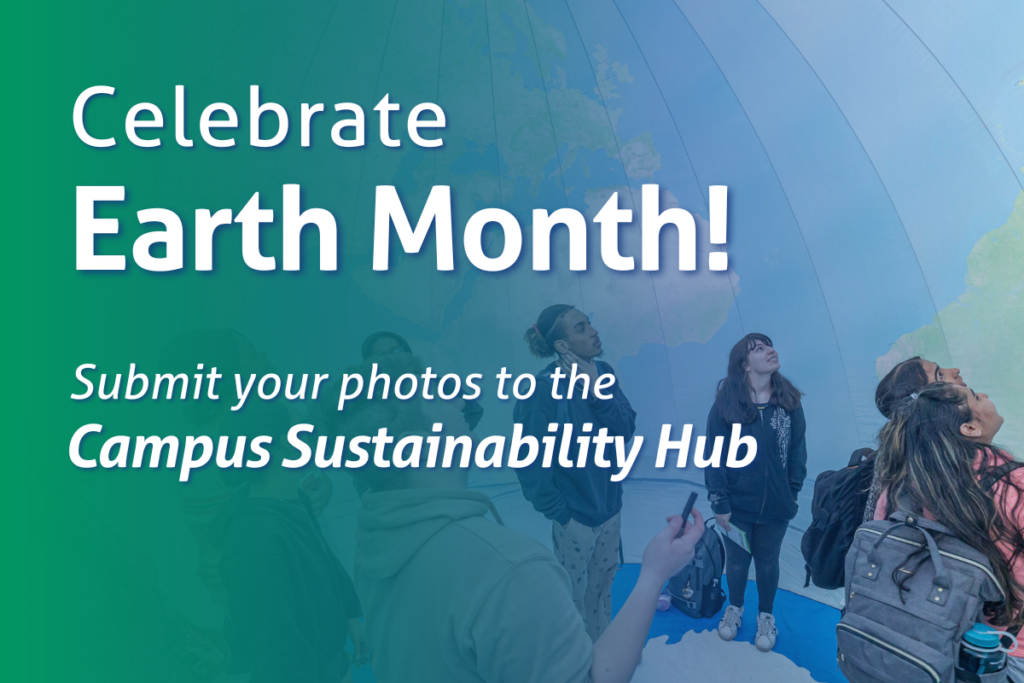
Throughout April, we’re inviting all members of our community to share their sustainability efforts through our Earth Day photo campaign. Whether you’re planting trees, advocating for environmental justice, or implementing energy-saving initiatives, we want to see how you’re making a difference. Submit your photos to the Campus Sustainability Hub or share them on social media using the hashtag #AASHEearth. Let’s showcase our collective commitment to advancing sustainability in higher ed!
Announcements
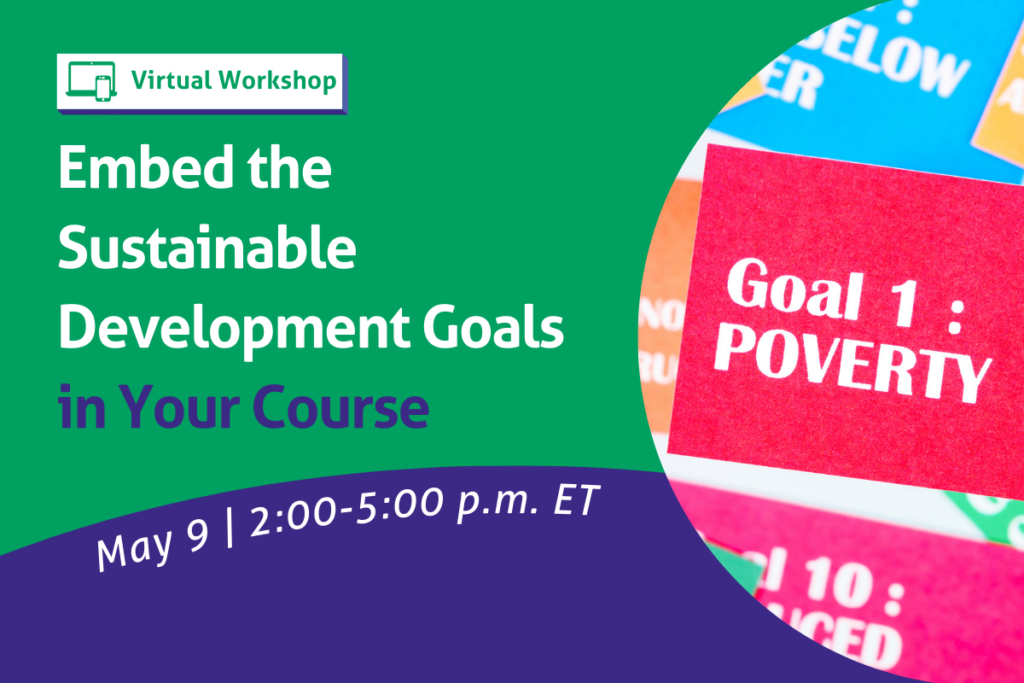
If you are interested in learning how the Sustainable Development Goals (SDGs) can enhance your course and engage students, this workshop is for you. Join us on May 9, from 2:00-5:00 pm ET, for our workshop: Embed the Sustainable Development Goals in Your Course. Led by Aditi Garg, an expert in educational development, this session offers you an opportunity to learn how to identify relevant SDGs for your course, develop targeted learning outcomes, and adapt your teaching methods for greater impact. Transform your course and inspire your students by registering today!
Announcements
Integrating Sustainability Literacy Across Your Curricula— Best Practices will explore the critical strategies necessary for integrating sustainability literacy within your curricula, leveraging four years of experience from professionals at The College of Charleston. Participants will learn to identify avenues for embedding sustainability, create compelling content focused on sustainability, assess the impact of sustainability literacy on students, and discover techniques for its effective implementation. Join us on Thursday, April 18, from 2:00-5:00 p.m. ET for this insightful workshop.
Announcements
Join us for the AASHE Sustainability Education Forum 2024 on June 6 & 7, building upon the success of our inaugural 2023 event. This year, we continue to explore urgent questions in higher education: How do we teach sustainability amidst global challenges, and can we reshape systems rather than revert to pre-pandemic norms? Utilizing Open Space Technology, the Sustainability Education Forum offers a space for open discussion, providing a platform to share expertise, co-create the future, and advance sustainability education across disciplines. Whether you’re a faculty member, curriculum developer, instructional designer, or anyone passionate about sustainability education, this event promises authentic conversations, professional connections, and a chance to recharge your efforts. Register today!
Announcements
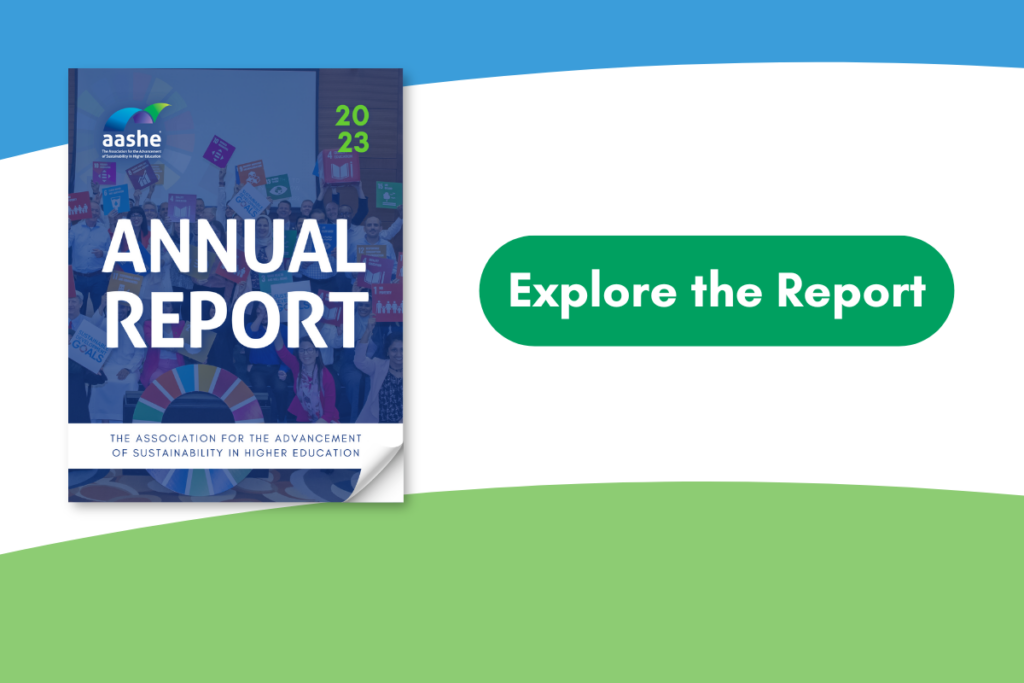
Read AASHE’s 2023 Annual Report, a compilation of insights that summarize a year of remarkable achievements toward advancing sustainability in higher education. None of the transformative work showcased in this report would be achievable without the invaluable support of our Board of Directors, STARS Steering Committee, Advisory Council, strategic partners, and dedicated staff. Dive into the report to discover how AASHE champions sustainability and supports institutions in their pursuit of a more sustainable future.
Sustainability Tracking, Assessment & Rating System (STARS) is a transparent, self-reporting framework for colleges and universities to measure their sustainability performance.
The largest stage to share effective models, policies, research, collaborations and transformative actions which advance sustainability in higher education.
A one-stop shop for toolkits and resource collections on all aspects of sustainability in higher education.
A weekly e-newsletter that delivers the latest in campus sustainability news, resources, opportunities, events, and jobs and internships.
Sustainability Tracking, Assessment & Rating System (STARS)
About AASHE
AASHE empowers higher education faculty, administrators, staff and students to be effective change agents and drivers of sustainability innovation. AASHE enables members to translate information into action by offering essential resources and professional development to a diverse, engaged community of sustainability leaders.
By sharing knowledge, cooperating on projects and fostering meaningful relationships, partners in the Mentorship Program help advance the field of higher education sustainability.
As the campus sustainability movement has evolved, a wide variety of networks of campus sustainability advocates have emerged. These networks, which are often formed along state, provincial and/or regional lines, share many goals with AASHE. For this reason, we have formalized a collaborative relationship with many of these networks through our Affiliates Program.
AASHE has partnered with 13 Centers for Sustainability Across the Curriculum on a pilot basis to offer workshops and other professional development opportunities on sustainability in the curriculum in an effort to increase the accessibility and diversity of sustainability-oriented training for faculty.